Cordless vs Corded Vacuums: Which Is Better? (October 2026)
For a cordless vs corded vacuum choice, pick cordless for short, frequent cleanups or corded for longer cleaning sessions. Match the floor tools, carrying weight and storage setup to your home before choosing a model.
On this page (10 sections)
- Cordless vs corded vacuum: which fits your cleaning routine?
- How much cordless runtime do you actually need?
- Does corded power mean better cleaning?
- Which vacuum is easier to carry and reach under furniture?
- Which tools matter for pet hair and furniture?
- Does filtration change the cordless or corded choice?
- What should you check before buying and setting up?
- Which care habits and mistakes matter most?
- Which of these 3 vacuums should you buy?
- Cordless vs corded vacuum: make the final choice
Choose cordless for short, frequent cleanups and corded for longer cleaning sessions with reachable outlets. The cordless vs corded vacuum decision comes down to how you clean, how far you carry the machine and which floor tools your home needs.
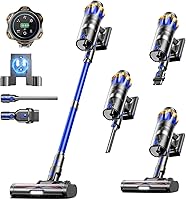
The Levoit LVAC-200 suits quick daily pickups, the Shark Rocket Pet Plus HV322 adds corded handheld use, and the Shark PowerDetect HZ4002 suits buyers who want automatic floor adjustments and sealed HEPA filtration.
Start with your busiest cleaning job: scattered crumbs, a full floor-cleaning route or pet hair across floors and furniture. That job should guide your choice more than the appeal of a battery or plug.


Cordless vs corded vacuum: which fits your cleaning routine?
Choose cordless if easy access makes you clean more often, or corded if you prefer finishing several rooms in one session. Your normal habits matter more than the cleaning schedule you hope to adopt.
A cordless vacuum works well for crumbs after meals, tracked-in dirt near the door and hair around a pet's bed. You can move straight to the mess without finding an outlet or routing a cable.
Corded power fits a planned route through bedrooms, living areas and rugs. It removes the need to budget battery time, although you'll still stop to empty the dust cup or clear a blockage.
Skip cordless as your only vacuum if you regularly need long sessions at a high setting and don't want to split the work. Skip corded if poor outlet placement or repeated trips between floors would make the machine awkward to use.
You can also keep a corded vacuum for longer cleans and add cordless for daily pickups. That approach makes sense only if you have storage for both and each solves a separate job.
Our guide to whether cordless vacuums are worth it can help you decide whether that extra convenience deserves space in your home.
How much cordless runtime do you actually need?
Use runtime with your main tool and power setting, not the largest number on the box. A long figure for a small attachment doesn't tell you how long you can clean floors.
Levoit gives the LVAC-200 up to 50 minutes with its crevice or pet tool in Eco mode, 30 minutes with the vacuum head, and 12 minutes in Turbo. Plan around the figure closest to your actual job.
If a few stubborn patches need extra power, use the higher setting there rather than across every room. Don't build a whole-home plan around low power if your rugs require more.
Time your normal route with your current vacuum, including upholstery and stairs. Leave some spare battery time for a second pass, a missed corner or a larger mess than usual.
Cordless vs corded vacuum for whole-home cleaning
Choose corded for a long, uninterrupted route; choose cordless when the route fits its usable runtime or can be split into smaller sessions. Home size matters, but clutter and surface changes affect cleaning time too.
A small home with several rugs and pet-covered furniture may take longer than a larger home with open hard floors. Room count alone is a poor way to judge battery needs.
Levoit offers extra genuine batteries for longer sessions. Consider the added charging and storage needs before choosing that route over a corded machine.
Charging time also affects how soon you can tackle a second job after draining a battery. Our cordless vacuum runtime guide explains how to plan around different tools and settings.
Does corded power mean better cleaning?
Power source alone doesn't rank cleaning performance. The floor head, brush design, airflow and fit for your surfaces all matter.
A corded vacuum's clear advantage is avoiding battery depletion during a longer job. That makes it useful when several rooms need attention, but it doesn't make every corded model suitable for every rug.
For carpet, check that the vacuum and brush settings suit the pile and the carpet maker's care instructions. A head that's hard to push or catches rug edges will slow the job even when power is available.
For hardwood, tile or laminate, keep the wheels and floor head clear of grit. Check that the brush setting suits the floor finish, and lift the head over objects that could scratch or jam it.
For a home with both carpet and bare floors, consider how often you'll change settings. Automatic adjustment can reduce that task, while manual controls give you a direct choice over the setting.
Which vacuum is easier to carry and reach under furniture?
The Levoit is the lightest of these three, but carrying weight and reach solve different problems. It weighs 6.2 pounds, compared with 8.6 pounds for the Rocket and 9.3 pounds for the PowerDetect.
Pay attention to where you'll lift the vacuum. Carrying between floors, working on stairs and holding a tool above waist height can feel different from steering a floor head.
The Levoit lies 180 degrees flat and has 3 LED lights to help reveal dust. The Rocket combines a low-profile nozzle, swivel steering and LED headlights for work around furniture.
Measure the gap beneath your lowest bed or couch before choosing a vacuum for that space. A head may fit underneath while the body, handle angle or nearby furniture limits how far it can travel.
For stairs, plan where the vacuum and cable will sit before you start. Our guide to cordless vacuums for stairs covers carrying, tool access and other practical tradeoffs.
Which tools matter for pet hair and furniture?
Prioritize the surfaces where hair collects, then choose tools that reach them. Hair on a sofa, along stair edges and across a rug calls for different movements.
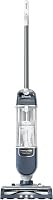
The Rocket converts to a handheld and includes a Pet Multi-Tool and Crevice Tool. It suits buyers who want to move from floor cleaning to furniture without bringing out another vacuum.
The Levoit includes a 2-in-1 pet tool and a dusting brush that doubles as a crevice tool. Its cordless setup helps when you move between chairs, beds and narrow corners.
The PowerDetect includes a Pet Power Brush, Upholstery Tool and Crevice Tool. Shark also gives it a self-cleaning brushroll, while Levoit uses an anti-tangle brush to help reduce hair wrap.
Those brush designs still need inspection. Switch the vacuum off and follow its manual before removing caught threads, string or hair from accessible parts.
Check fabric care instructions before using a powered brush on delicate upholstery. Our guide to cordless vacuum attachments explains which tools are useful for gaps, furniture and dusting.
Does filtration change the cordless or corded choice?
Choose filtration separately from power source, especially if keeping captured dust inside the machine matters to you. A plug or battery doesn't tell you how well the filter and seals work together.
The PowerDetect pairs a HEPA filter with Shark's Anti-Allergen Complete Seal. Shark says the system traps 99.99% of dust and allergens measuring 0.3 microns or larger.
The Levoit has a 5-stage filtration system that Levoit says captures 99.9% of particles as small as 0.3 microns. Avoid treating these percentages as a ranking of floor pickup, since filtration and debris removal are different jobs.
Filter care matters whichever type you choose. A blocked filter can restrict airflow, so follow the model's instructions for cleaning, drying and replacement.
For help understanding filter labels and sealed systems, read what HEPA means on a cordless vacuum.
What should you check before buying and setting up?
Check outlet reach or charging space before the vacuum arrives. These details determine whether its power system works with your home.
For a corded model, map the route from available wall outlets to the far corners of each room. Confirm the exact cord length, and plan outlet changes rather than pulling the cable tight.
Keep the cable away from stair edges and busy walkways. Before considering an extension, follow the vacuum's manual and read the CPSC's extension cord safety guidance.
For cordless, choose a dry charging location with access to an outlet. Follow the instructions for charger placement and mounting, including checking the wall and fixing method before drilling.
The Levoit includes a wall mount. The Rocket stores freestanding after you detach its hand vacuum and clip it to the wand base, while the PowerDetect stands on its own.
Allow room to reach the dust cup and remove the tools. A vacuum that fits inside a closet may still be awkward if you must move several items to put it away.
Before the first clean, check that the filter, dust cup, wand and head are fitted correctly. Read the controls and attachment instructions so you can change tasks without forcing a connection.
Which care habits and mistakes matter most?
Clear airflow and correct brush care matter for both types. Changing from cordless to corded won't solve a full dust cup, tangled brush or blocked airway.
Empty the cup before debris reaches its fill limit, and inspect the head when pickup drops. Stop and check for a blockage rather than repeatedly making passes over the same patch.
Wash filters only when the manual allows it, and let washable parts dry fully before refitting them. Levoit recommends replacing the LVAC-200 filter every 3 months, so include that task in its care routine.
The LVAC-200 is for dry messes only. Use a suitable method for wet spills, and check the instructions before collecting fine powders or unusual debris with any vacuum.
Avoid these common mistakes:
- Using maximum runtime as floor-cleaning time: Match the tool and setting to the job.
- Running high power everywhere: Reserve it for areas that need it, when lower power handles the debris.
- Relying on anti-tangle features alone: Inspect the brush and remove obstructions as instructed.
- Dragging the cord around corners: Move to a closer outlet instead of pulling against furniture.
- Storing a cordless vacuum without charging: Build charging into your cleanup routine using the supplied charger and instructions.
For help choosing a battery-powered machine beyond these examples, see our cordless stick vacuum buying guide.
Which of these 3 vacuums should you buy?
Choose the Levoit for daily spot cleaning, the Rocket for corded floor-to-furniture use, or the PowerDetect for automatic adjustments and sealed filtration. Each fits a different priority.
| Product | Best for | Power | Weight | Storage | Our score |
|---|---|---|---|---|---|
| Levoit LVAC-200 Cordless Vacuum | daily spot cleaning | Rechargeable battery | 6.2 lb | Included wall mount | 9.0 |
| Shark Rocket Pet Plus Corded HV322 | furniture and stairs | Corded | 8.6 lb | Hand vacuum clips to wand base | 7.5 |
| Shark PowerDetect Corded HZ4002 | mixed-floor pet homes | Corded | 9.3 lb | Self-standing | 6.9 |
Levoit LVAC-200: choose it for frequent short cleanups
Buy the Levoit if carrying less weight and moving freely between rooms will make daily cleaning easier. It suits a routine built around small messes and manageable floor-cleaning sessions.
Its 0.75-liter dustbin empties with one click. Check it during hair-heavy jobs rather than assuming battery time will always determine when you stop.
Skip it as your sole vacuum if your normal job needs more high-power time than its battery allows. A spare battery can extend the session, but that adds another item to manage.
Shark Rocket HV322: choose it for corded handheld use
Buy the Rocket if you want one corded machine for floors, stair edges and furniture. Its handheld conversion is the main reason to choose it over a model focused on floor features.
It works on carpet and hard floors, so it fits a mixed route that ends with sofa cushions or stair treads. Make sure the outlets support that route before buying.
Skip it if the trailing cord is the main reason you put off cleaning. Also account for the detach-and-clip step needed for its compact freestanding storage.
Shark PowerDetect HZ4002: choose it for floor changes and hair care
Buy the PowerDetect if your route crosses different surfaces and you want automatic brushroll adjustment. Its sensors also direct suction according to whether you're moving forward or backward.
The 0.87-quart dust cup, self-cleaning brushroll and sealed HEPA system suit buyers who prioritize floor features and dust containment. It has one power level, so don't choose it expecting several manual power settings.
Skip it if carrying between floors is your main concern. Its added weight makes the lighter Levoit a better starting point for that priority.
Cordless vs corded vacuum: make the final choice
For your cordless vs corded vacuum decision, choose the machine that can finish your hardest regular job with a setup you'll use willingly. A quick pickup vacuum and a whole-home vacuum don't always need to be the same machine.
Pick the Levoit for short daily rounds, the Rocket for corded handheld work, or the PowerDetect for a longer route where automatic floor adjustments and sealed filtration matter most.
If none fits because you need a different shape or carrying balance, use our stick vacuum vs upright vacuum comparison to narrow the next choice.
Frequently asked questions
Is a cordless vacuum better than a corded one?
A cordless vacuum is better for short, frequent pickups when a trailing cord would slow you down; a corded model suits longer cleaning sessions with reachable outlets. Choose between them using your normal route, then compare floor tools, carrying weight and storage rather than treating either power source as a measure of cleaning ability.
Can a cordless vacuum clean a whole house?
Yes, if its usable floor-cleaning runtime covers your route at the power setting you need; include rugs, furniture and stairs when judging the job. A maximum runtime for a small attachment may not apply to the floor head, and frequent use of a higher setting leaves less time for other rooms.
Do corded vacuums have unlimited runtime?
Corded vacuums have no battery runtime limit while plugged in, but they still need normal care and any pauses required by their manuals. A full dust cup, blocked airway or dirty filter can interrupt cleaning; cord reach also determines when you need to stop and change outlets.
Which vacuum is easier to store?
The easiest vacuum to store is the one whose complete setup fits your available space; a cordless model needs a suitable charging spot, while a corded model needs room for its cable. Check where the tools go too, since loose attachments can make a narrow storage area harder to use.
Which is better for stairs, cordless or corded?
Cordless is convenient for stairs because there's no trailing cable to manage, but carrying weight and tool fit still matter; a corded handheld option can also suit stair cleaning if the outlet route works. Keep the machine secure, avoid stretching the cord and follow the manual for the attachment you use.