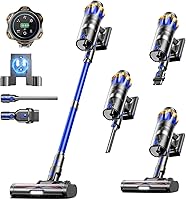
How to Choose a Cordless Vacuum
To decide how to buy a cordless vacuum, match its floor head, usable runtime, weight and tools to your home. Compare runtime with your intended attachment, then check bin capacity, replacement parts and storage.
On this page (11 sections)
- How to buy a cordless vacuum for your floors
- How much battery runtime do you need?
- Does vacuum weight matter for everyday use?
- Which of these cordless vacuums suits your routine?
- How large should the dust cup be?
- Which attachments are worth having?
- What should you check about filters and upkeep?
- Where will you charge and store it?
- What should you do when the vacuum arrives?
- Which buying mistakes should you avoid?
- How do you make the final cordless vacuum choice?
To work out how to buy a cordless vacuum, match its floor head, usable runtime and handling to your regular cleaning route. Then check the tools, upkeep and charging space that will make it practical to use every day.
Start by deciding whether it will handle quick pickups or serve as your main vacuum. A compact daily cleaner and a machine for several carpeted rooms have different demands.
For a broader overview of the category, read our complete cordless stick vacuum guide. Here, the goal is to turn your home’s needs into a short buying checklist.
How to buy a cordless vacuum for your floors
Choose a floor head suited to your surfaces, then check that its settings fit the mess you clean most. Count carpeted rooms, hard-floor areas and loose rugs separately, since each can change how you use the vacuum.
For hard floors, focus on collecting crumbs, dust and hair without dragging trapped grit across the finish. Check your flooring care instructions before choosing a rotating brush for delicate wood or other sensitive surfaces.
Carpet makes brush action and comfortable forward movement more important. If suction pulls a loose rug upward or makes the head hard to push, use an appropriate lower setting rather than forcing it across the surface.
For a mixed home, easy changes between settings matter more than the highest advertised power figure. Our guide to choosing a cordless vacuum for carpet and hardwood explains that trade-off.
Before buying a cordless vacuum, map your cleaning route
Write down the rooms you normally clean together, the surfaces in each and the awkward spots you tend to miss. Include stairs, sofa cushions and the space beneath beds if those belong in the same session.
Choose your 3 must-haves before comparing models. For example, an apartment with a shedding cat might need an anti-tangle brush, an upholstery tool and compact storage more than a long list of accessories.
Also decide what your existing vacuum will still do. If the cordless model must replace it entirely, judge it against your longest routine clean rather than a quick kitchen pickup.
How much battery runtime do you need?
Buy enough runtime for your normal route with the floor head attached, with room for extra passes. Time a typical session with your current vacuum instead of guessing from the size of your home.
Compare runtime by attachment and power mode. A low-power handheld estimate and a stronger floor-cleaning estimate describe different jobs, even when both appear beside the same battery.
Levoit gives the LVAC-200 up to 50 minutes with the crevice or pet tool in Eco mode, 30 minutes with the vacuum head, and 12 minutes in Turbo mode. For routine floors, use the head figure as your starting point.
Shark gives the IX141 up to 40 minutes at the handheld vacuum in standard mode. That is a handheld benchmark, so buyers planning uninterrupted floor cleaning need to check floor-head runtime before choosing it.
KARDV gives its model up to 60 minutes in minimum mode and 20 to 25 minutes in maximum mode. NuYupo gives the DHC100 up to 45 minutes in Eco mode, so plan around that setting rather than assuming equal time at higher power.
A removable battery helps only if you can obtain a compatible spare and charge it as directed. Levoit offers an extra genuine battery for longer sessions; confirm spare availability for any other model before counting on that option.
If your route is close to a model’s stated limit, choose more breathing room or split the work into shorter sessions. Our guide to how much runtime you need helps you plan around actual cleaning tasks.
Does vacuum weight matter for everyday use?
Choose a vacuum you can carry, turn and hold comfortably for your full route. Total weight matters on stairs, while balance at the handle matters during furniture and above-floor cleaning.
A floor head supports some weight while rolling, but your arm supports more when you lift the vacuum. Handheld conversion shortens the machine, which can make stair treads and sofa cushions easier to approach.
Check the return policy if handling is a major concern. A lighter model can still feel awkward when reaching sideways or holding a tool above shoulder level.
Think about the whole job, including carrying it from storage and emptying the bin. A vacuum that is easy to move but difficult for you to empty is a poor fit for daily use.
Which of these cordless vacuums suits your routine?
Choose Shark for pet-tool use and compact freestanding storage, Levoit for low-furniture access, KARDV for longer low-power sessions, or NuYupo for upright pauses and varied small jobs. Use the trade-offs below to rule out options before focusing on extra features.
Shark IX141: for upholstery and compact floor storage
The Shark suits buyers who move between floors, stairs and pet-covered furniture. It combines a bristle floor brush with handheld conversion, a crevice tool and a Pet Multi-Tool.
Its low-profile design and LED headlights are useful features for reaching and seeing beneath furniture. For storage, detach the handheld and clip it at the base of the wand to create a freestanding arrangement.
At 6.9 lb, it is the heaviest option here. Skip it if carrying weight is your main concern or you want to park the full assembled stick upright without rearranging it.
It also suits smaller batches of debris better than buyers who dislike frequent emptying. Its floor-head runtime needs checking if it will be your only cleaner for a long route.
Levoit LVAC-200: for low furniture and daily hair pickup
Choose the Levoit if your routine includes dust beneath beds and hair across open floors. Its anti-tangle brush addresses wrapped hair, while its flat position helps with low furniture.
The included 2-in-1 pet tool and combined dusting and crevice tool cover furniture and narrow gaps without a large accessory collection. Its 3 power levels let you reserve stronger suction for areas that need it.
Skip it if most of your route requires Turbo mode and you want to finish on one battery. It is also a poor choice if you expect to collect wet spills, since Levoit specifies dry messes only.
Budget for regular filter replacement as part of ownership. A spare battery can extend a session, but it adds another item to charge and store.
KARDV: for longer routes with a larger bin
Choose the KARDV if you want a larger dust cup, a removable battery and a longer low-power runtime allowance. Its V-shaped anti-tangle roller also suits buyers dealing with long hair or pet fur.
The display shows remaining power, suction mode and a brush-winding reminder. Those details help you decide whether to finish another room or stop to clear the head.
Its included crevice tools and sofa brush make it relevant for narrow gaps and upholstery as well as floors. Wall-mounted charging suits buyers with a suitable mounting spot near an outlet.
Skip it if you cannot accommodate that charging arrangement without first confirming another approved setup. Buyers choosing mainly by suction numbers should also avoid treating its advertised 40 kPa in maximum mode as a cross-brand cleaning ranking.
NuYupo DHC100: for frequent pauses and varied small jobs
Choose the NuYupo if you often stop to move chairs, pick up toys or switch between floors and furniture. Its self-standing design gives you a place to pause without finding a wall to lean it against.
A touch display provides access to 3 suction modes and remaining power. The included pet hair brush, dust brush and dryer vent cleaner suit buyers with several specific small jobs.
The detachable battery takes 4.5 hours to charge, so plan charging between sessions. Keep its parking location away from foot traffic even though it can stand by itself.
Skip it if you want minimal filter upkeep or need a confirmed stronger-mode runtime before buying. Its broad tool set adds value only if you will use and store those attachments.
How large should the dust cup be?
Choose a larger bin when you regularly collect bulky fur or clean several rooms between empties. For small daily pickups, easy emptying can matter more than maximum capacity.
The Shark holds 0.34 qt, roughly 0.32 L, and the Levoit holds 0.75 L. KARDV and NuYupo each have a 1.5 L dust cup.
Fur can fill a bin quickly without weighing much, while fine dust may collect around filters. Empty at the marked limit rather than packing debris down to finish another room.
Look at how the bin opens over your trash can and whether you can reach trapped debris. One-touch emptying still needs a sensible disposal spot, especially when loose dust can escape.
Which attachments are worth having?
Buy tools for specific places you already clean, such as sofa seams, stair edges or car seats. Accessory counts are less useful than knowing which tool will reach each space.
A crevice tool fits narrow gaps, while a dusting brush is useful for suitable shelves and other surfaces that need gentler contact. An upholstery or pet tool belongs on the shortlist if furniture collects hair.
For stairs, consider both the tool and the space available to hold the handheld body. A long assembled stick can be awkward on a narrow landing even when the machine itself is light.
Check whether a tool is powered or passive before expecting it to do the job of a rotating floor brush. Our guide to which cordless vacuum attachments you need explains the common tool types.
What should you check about filters and upkeep?
Choose a vacuum with care tasks you will actually keep up with and replacement parts you can obtain. Before buying, check filter access, brush removal and the correct replacement part numbers.
Levoit recommends replacing the LVAC-200 filter every 3 months. NuYupo recommends cleaning the DHC100 HEPA filter every 2 to 3 weeks and replacing it every 3 months.
Follow each model’s instructions rather than applying one vacuum’s schedule to another. Wash only parts approved for washing, and let washed filters dry fully as directed before refitting them.
An anti-tangle brush still needs inspection. Check the roller ends and inlet for wrapped fibers or lodged debris, with the machine switched off and the battery disconnected where the instructions require it.
For a fuller brush-care routine, see how to stop hair wrapping around a cordless vacuum brush. Clearing a small obstruction early is easier than leaving it until airflow or brush movement drops.
If filtration is a priority, read what HEPA means on a cordless vacuum. A filter type and whole-machine sealing are separate details, so compare both rather than relying on a filtration percentage alone.
Where will you charge and store it?
Pick a charging spot before you order, with an outlet and enough room to retrieve the vacuum easily. Storage convenience affects whether the machine is ready for a quick cleanup.
Check whether the mount charges the vacuum or simply holds it. Also confirm wall suitability, installation requirements and whether a landlord permits drilling if you rent.
Allow room to remove the battery or handheld unit and keep attachments together. A narrow gap may fit the vacuum body but leave too little space to lift it off a mount.
Freestanding storage and self-standing pauses serve different needs. Our stick vacuum storage ideas can help you choose a practical location without blocking a doorway.
What should you do when the vacuum arrives?
Assemble it according to the manual, charge it as directed and check that the bin, filters and tools are seated correctly. Keep the packaging until you have confirmed that handling and storage suit your home.
Start on a small section of each floor using the recommended setting. Check that the head moves comfortably, rugs stay manageable and tools connect securely before beginning a full route.
Pick up cords, loose fabric and objects that could jam the roller. Use a crevice tool around tight edges instead of repeatedly pushing the floor head into gaps it cannot reach.
After the first normal session, note battery use and bin fill. That gives you a practical basis for deciding whether to clean room by room, empty midway or reserve higher power for stubborn patches.
Which buying mistakes should you avoid?
Avoid choosing by one large number, whether that is runtime, motor wattage, suction pressure or accessory count. Your floors and cleaning route determine which combination is useful.
| Common mistake | Better buying decision |
|---|---|
| Comparing headline battery times | Compare the same mode and attachment where possible |
| Buying for maximum suction alone | Check floor-head suitability and comfortable movement |
| Choosing the largest bin automatically | Balance debris volume with carrying and emptying |
| Assuming anti-tangle means no care | Check brush access and plan regular inspections |
| Counting accessories as equal benefits | Name a real job for each tool you need |
| Planning storage after delivery | Measure the charging spot and check mount requirements |
| Assuming every battery has a spare | Confirm compatible replacements before relying on one |
Another mistake is making a cordless vacuum your only cleaner without planning for your longest job. For that decision, compare cordless vs corded vacuums before committing.
How do you make the final cordless vacuum choice?
The clearest rule for how to buy a cordless vacuum is to choose for your hardest regular job, then check everyday convenience. Eliminate any option that misses a must-have before comparing extras.
Choose the Shark for pet upholstery tools and compact freestanding storage, or the Levoit for daily hair pickup beneath low furniture. Choose KARDV for longer low-power routes and a larger bin, or NuYupo for self-standing pauses and varied handheld tasks.
Before ordering, confirm replacement filters, your charging arrangement and runtime for the setup you need. If several models still fit, use our best cordless stick vacuums to narrow the choice around your main cleaning priority.
Frequently asked questions
How do I buy a cordless vacuum?
Buy a cordless vacuum by matching its floor head and usable runtime to your regular cleaning route; next, check carrying weight, dust cup capacity, tools and charging space. Before ordering, confirm that you can get replacement filters and any compatible spare battery you expect to need.
How much runtime do I need in a cordless vacuum?
You need enough runtime to finish your normal route in the mode and attachment setup you will actually use; time your current cleaning session, then allow room for extra passes and furniture. A headline runtime measured with a small tool can overstate the time available for floor cleaning.
Do cordless vacuums work on carpet and hardwood?
Many cordless vacuums suit both carpet and hardwood, but you should match the head and settings to each surface; check the vacuum instructions alongside your flooring care guidance, especially for delicate finishes or thick rugs. Start with an appropriate lower setting if stronger suction makes a rug difficult to clean.
What should I check before buying a cordless vacuum for pet hair?
Check for an anti-tangle floor brush, a useful upholstery tool and easy access to the brushroll and bin; floor hair and sofa hair need different tools, so choose for both if necessary. Also consider how often you are willing to empty collected fur and clear hair from the brush.