Levoit LVAC-200 vs LVAC-300: Which Should You Buy? (October 2026)
In the Levoit LVAC-200 vs 300 comparison, choose the LVAC-200 for frequent carrying and quick pet-hair pickups, or the LVAC-300 for HEPA filtration, motorized upholstery cleaning and longer Eco floor-head runtime.
On this page (11 sections)
- Levoit LVAC-200 vs 300: which fits your cleaning routine?
- What actually changes between the 2 models?
- Which model suits your floors and furniture?
- How much battery time should you plan for?
- Which one is easier to carry and use above the floor?
- Does the LVAC-300's HEPA filter change the decision?
- Which tools make more sense for pet hair?
- How should you set up either vacuum?
- What care keeps suction from dropping?
- Who should skip each model?
- Levoit LVAC-200 vs 300: make the final choice
Choose the LVAC-200 for frequent carrying and quick pet-hair pickups, or the LVAC-300 for motorized upholstery cleaning, HEPA filtration and longer Eco floor-head runtime. This Levoit LVAC-200 vs 300 comparison comes down to the jobs you do each week.
Start with where the dirt collects: open floors, under furniture, sofa cushions or bedding. The right attachment and enough battery time for those tasks matter more than the model number.
Levoit LVAC-200 vs 300: which fits your cleaning routine?
The LVAC-200 suits shorter daily cleanups and frequent carrying; the LVAC-300 suits a routine that includes floors, sofas and bedding. Its extra Eco runtime is useful when you want to finish more rooms in one session.
Choose around your busiest cleaning day, rather than an occasional crumb pickup. Someone who cleans the kitchen each evening has different needs from someone who saves floors and furniture for one weekly session.
For a small home, either model may provide enough time when you clean regularly in Eco. For a larger home, the key question is how much of your route needs higher power.
Neither model gains an advantage in dustbin size or maximum Turbo runtime. Buying the LVAC-300 makes sense when its particular tools, filter or longer Eco sessions solve a need you already have.

What actually changes between the 2 models?
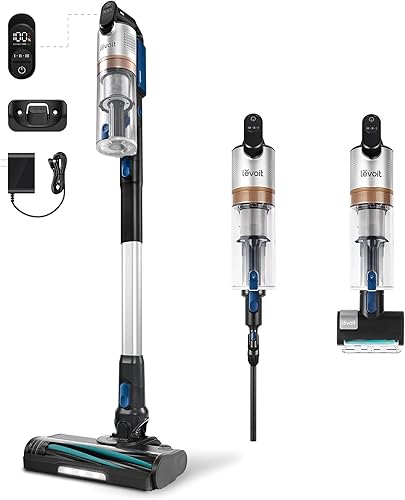
The meaningful differences are weight, filtration, included tools and Eco runtime. Both have a 0.75-liter dustbin and 3 power levels, so those shared features do not decide the matchup.
| Feature | LVAC-200 | LVAC-300 |
|---|---|---|
| Weight | 6.2 lb | 6.6 lb |
| Eco runtime with vacuum head | Up to 30 min | Up to 40 min |
| Maximum Eco runtime | Up to 50 min with crevice or pet tool | Up to 60 min with crevice tool |
| Turbo runtime | Up to 12 min | Up to 12 min |
| Filtration | 5-stage system with foam filter | HEPA filter |
| Specialty attachment | 2-in-1 pet tool | Mini motorized brush |
| Narrow-space attachment | Dusting brush that doubles as a crevice tool | Crevice tool |
Levoit's runtime figures use specific modes and attachments under room-temperature conditions. Plan around the tool you use most, with some battery time left for edges and furniture.
LVAC-200 vs LVAC-300: when does the upgrade help?
The LVAC-300 helps most when upholstery is part of every cleaning session or your floor route regularly runs beyond the LVAC-200's Eco allowance. Its advantages are less useful if you mostly grab a vacuum for brief floor pickups.
Do not move up solely because you expect longer high-power cleaning. Both have the same Turbo runtime figure, so a routine built around that mode needs a different battery plan.
Which model suits your floors and furniture?
Choose the LVAC-300 for hard floors and low-pile carpets with regular sofa cleaning. Levoit identifies those floor types for its vacuum head and provides a separate motorized brush for bedding and sofas.
The LVAC-200 makes sense when you value access under furniture. It lies 180° flat and has 3 LED lights to help reveal dust, though the head still needs enough clearance to fit.
For mostly hard floors, map the awkward spots before buying. Chair legs, narrow gaps and low cabinets can take more time than the open middle of a room.
A crevice tool can reach dry debris along edges and between cushions. Use a suitable brush attachment on delicate surfaces, and follow the surface maker's care guidance.
Thick rugs and deep carpet deserve a separate decision. Do not choose either model on the assumption that a higher model number means stronger deep-carpet cleaning.
If carpet is most of your home, start with our guide to choosing a cordless vacuum for carpet and hardwood. It helps you weigh floor type against battery demands before settling on a model.
How much battery time should you plan for?
Use the floor-head runtime as your starting point if floors are the main job. The larger maximum figures apply to accessory use and should not become your estimate for cleaning every room.
The LVAC-300's extra 10 minutes in Eco with the floor head gives you more room for a longer route. It does not mean you can spend that whole session in Turbo.
Break your route into tasks: open floors, edges, rugs and furniture. If rugs need repeated higher-power passes, allow more battery margin or divide the work into separate sessions.
Start in the lowest mode that picks up the debris, then increase power where needed. Running Turbo everywhere uses battery time that could serve a stubborn patch later.
Levoit gives the LVAC-300 a 3.5-hour charge time. Put charging into your routine so the vacuum is ready before a planned whole-home clean.
Levoit also offers an extra genuine battery for the LVAC-200 to extend cleaning time. That requires a separate battery plan, including having a charged spare ready when needed.
For help estimating your route, see how much cordless vacuum runtime you need. Room layout and cleaning habits are more useful than a simple room-count rule.
Which one is easier to carry and use above the floor?
The LVAC-200 has the weight advantage, which favors buyers who carry a vacuum upstairs or move it between rooms often. Its 0.4 lb difference is modest, so also consider how you will hold it.
Floor cleaning lets the head rest on the surface. Cleaning curtains, shelves or stair edges asks you to support more of the vacuum while reaching.
For above-floor work, attach the tool close to the body when the manual allows it. Avoid holding a long assembly at arm's length when a shorter setup can reach the same spot.
On stairs, keep a stable stance and move one step at a time. Do not stretch across several steps just to avoid moving your feet.
If stairs are a major part of your routine, our guide to cordless vacuums for stairs covers the tradeoffs between carrying weight, tool access and reach.
Does the LVAC-300's HEPA filter change the decision?
Choose the LVAC-300 if having a HEPA filter is a requirement. The LVAC-200 has a different filtration system, so it is not the substitute to choose when that filter type matters to you.
Levoit claims the LVAC-300 captures 99.99% of particles as small as 0.3 microns, based on ASTM F3150-18. For the LVAC-200, Levoit claims 99.9% capture at that particle size under ASTM F1977-22.
Those claims use different standards, so the percentages are not a direct comparison of whole-room air cleaning. Neither figure is a reason to expect a medical benefit.
Filter care also belongs in the buying decision. A filter needs correct fitting and regular attention, while emptying the bin still involves handling collected dust.
Read what HEPA means on a cordless vacuum if you want help separating filter terminology from broader claims about air quality.
Which tools make more sense for pet hair?
Choose the LVAC-200 for its 2-in-1 pet tool, or the LVAC-300 for a motorized brush intended for sofas and bedding. Buy for the surface that holds the hair, rather than the word “pet” alone.
For cushions and soft furnishings, check the fabric's care instructions before using a powered brush. Use the crevice tool for seams and narrow gaps where the wider attachment cannot reach.
Both models have anti-tangle brush designs intended to reduce hair wrap. That feature reduces one maintenance concern, but it does not remove the need to inspect the roller and its ends.
Pick up long string, ribbon and similar loose items before vacuuming. After a hair-heavy session, switch the vacuum off and follow the manual before clearing anything caught around the brush.
Our guide to stopping hair from wrapping around a cordless vacuum brush explains where tangles collect and how to keep them from building up.
Do not buy a larger tool collection just to store it. The useful attachment is the one that fits your regular task, as our guide to cordless vacuum attachments explains.
How should you set up either vacuum?
Choose the storage spot and read the assembly instructions before the first clean. Both include a wall mount and charger, so plan a place with suitable outlet access and enough room to remove the vacuum easily.
Follow the mounting instructions for your wall type. Keep the vacuum and charging area away from wet floors, and route the cord where people will not catch it with their feet.
Check that the bin, filters, stick and chosen head are seated correctly. Use the supplied charger and follow the manual's charging directions before starting.
Clear loose cords, small objects and wet patches from your route. Neither model should be treated as a wet-spill cleaner.
Make the first session a short route through your normal rooms. Notice where you need another tool or more power so you can plan future sessions around those spots.
Keep accessories near the storage area. A sofa brush left across the house is less likely to get used during a quick cleanup.
What care keeps suction from dropping?
Empty the bin, inspect the air path and care for the filters before reaching for more power. A full bin, blocked stick or dirty brush can interfere with pickup.
Check the bin during hair-heavy cleaning instead of waiting until the end. Bulky fluff takes up space quickly, and overfilling makes emptying less convenient.
If pickup falls suddenly, switch off and check the head opening, stick and vacuum body for a blockage. Clear the cause before continuing, rather than repeatedly selecting a higher mode.
Follow each model's instructions for filter cleaning. Do not assume that every filter can be rinsed, and let any washable part dry fully before refitting it.
Levoit recommends replacing the LVAC-200 filter every 3 months for best performance. Include replacement filters in your care plan and use the correct parts for the model.
Inspect the roller for trapped debris and avoid cutting near bristles or other parts. If the manual gives a removal procedure, follow it rather than pulling the assembly apart.
Who should skip each model?
Skip the LVAC-200 if you specifically need HEPA filtration or the included mini motorized brush. Its lower weight does not replace either feature, and buying the wrong tool mix creates extra work later.
Also skip it if your usual floor route already needs more time than its Eco allowance and you do not want to split the job or manage a spare battery.
Skip the LVAC-300 if its added tools and filtration have little value in your home. For short pickups with frequent carrying, the lighter model is the more direct fit.
Do not choose the LVAC-300 to avoid emptying the bin more often or to gain longer Turbo sessions. Those shared limits remain.
Consider another vacuum type if you need long, uninterrupted high-power cleaning, mostly deep carpet or liquid pickup. Those needs should set the category before you compare these 2 cordless sticks.
Levoit LVAC-200 vs 300: make the final choice
For the Levoit LVAC-200 vs 300 decision, match the vacuum to your hardest regular task. A weekly sofa clean points toward the LVAC-300; repeated carrying and brief daily pickups point toward the LVAC-200.
Choose the LVAC-200 if your floor route fits comfortably within its battery allowance and its pet tool covers your furniture needs. Our Levoit LVAC-200 review takes a closer look at that choice.
Choose the LVAC-300 if you will use the motorized upholstery brush, need its HEPA filter or want more Eco time to finish your floor route.
Before ordering, settle 3 things: where it will charge, which attachment you will use most and whether your routine needs frequent high power. If those answers point beyond either model, use our cordless stick vacuum guide to narrow the next options.
Frequently asked questions
Is the Levoit LVAC-300 better than the LVAC-200?
The LVAC-300 is better suited to buyers who want HEPA filtration, a mini motorized brush for sofas and bedding, or longer Eco floor-head runtime. Choose the LVAC-200 if you carry the vacuum often and prefer its lighter weight and included 2-in-1 pet tool.
Which Levoit vacuum has longer battery runtime?
The LVAC-300 has longer Eco runtime: up to 40 minutes with the vacuum head, compared with 30 minutes for the LVAC-200; maximum crevice-tool figures are 60 and 50 minutes, respectively. Both offer up to 12 minutes in Turbo, so the LVAC-300's advantage is in lower-power cleaning.
Do the LVAC-200 and LVAC-300 have the same dustbin capacity?
Yes, both have a 0.75-liter dustbin, so moving to the LVAC-300 does not give you more debris space. Hair and bulky fluff can fill a bin before a cleaning session ends; empty as needed rather than choosing between these models on capacity.
Which Levoit vacuum is lighter?
The LVAC-200 weighs 6.2 lb, while the LVAC-300 weighs 6.6 lb; the difference favors the LVAC-200 for frequent carrying, but total weight is only part of comfort. Think about how long you will hold the vacuum up and which attachment you need for that task.
Can the LVAC-200 or LVAC-300 clean wet spills?
Do not use either as a wet-spill cleaner; the LVAC-200 is designed for dry messes only, and liquid pickup is not an established capability of the LVAC-300. Blot or mop spills separately, then let the area dry before vacuuming remaining dry debris.